The Complete Beginners Guide to Puppy Training
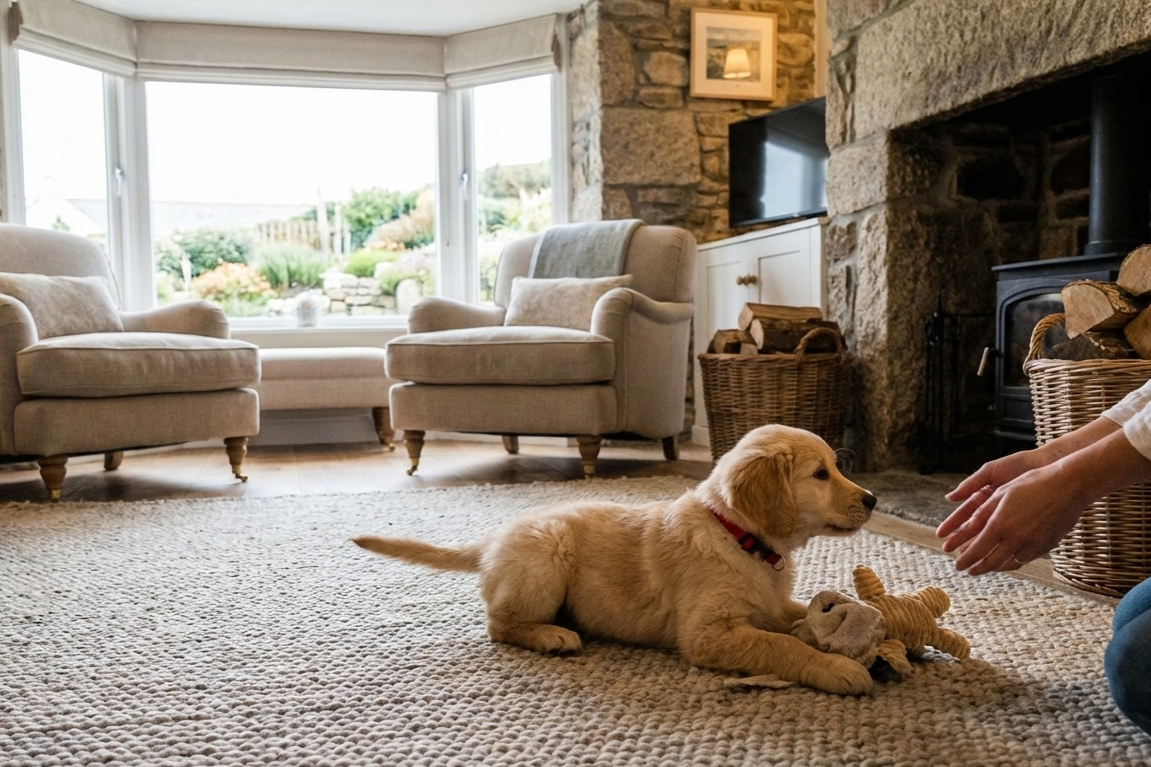
The skills your puppy should be learning month by month.
Bringing a new puppy into your home is one of life’s most joyful experiences—but it can also feel overwhelming. With so much to teach and so many milestones to hit, it’s hard to know where to start. That’s why at Connor Trains Dogs, we’ve created a complete puppy training schedule by age, designed to help your pup grow into a calm, confident, and well-mannered companion.
Whether it’s your first puppy or your fifth, this schedule gives you a clear, structured plan to make puppyhood manageable and enjoyable—so you can focus on all those special moments, from cuddles on the sofa to leisurely walks along the Cornish coast.
Why a Puppy Training Schedule Matters
Every puppy grows quickly, and the early months are key to setting good habits. Without guidance, behaviors like nipping, chewing, potty accidents, and excessive barking can quickly take hold. By introducing training gradually and consistently, your puppy learns not just obedience, but also confidence, social skills, and impulse control.
Our approach is gentle, effective, and tailored to your lifestyle—perfect for busy parents who want a happy, well-behaved pup without the stress.
Three Key Principles for Early Puppy Training
Before diving into the weekly schedule, keep these three principles in mind:
Use Your Puppy’s Food as a Training Tool
Your puppy’s meals are an incredible training resource. Use kibble or treats to capture their attention, encourage focus, and reward good behavior. At Connor Trains Dogs, we teach our clients to use their puppy’s food for everything from basic commands to redirecting unwanted chewing. More on this on our puppy training page.Patience and Consistency Are Everything
Puppies are learning about the world—and they’ll make mistakes. Consistency is key: establish a daily routine of feeding, potty breaks, play, training, and naps. This structure gives your puppy confidence, teaches boundaries, and makes your life easier.Short, Frequent Practice Sessions
Puppies have short attention spans, so keep training sessions brief but frequent. Start with 5–10 minutes for young puppies, building to 10–15 minutes as they grow. Mealtimes are perfect for reinforcing commands like Sit and Come. Once vaccinations are complete, practice outdoors to generalize behaviors.
Puppy Training Schedule by Age
8–10 Weeks Old
Your puppy is just settling in. Focus on:
Introducing their name and getting reliable name recognition
Potty training using a consistent schedule
Crate training to promote independence and reduce separation anxiety
Basic commands: Sit & Come (full command tutorial)
Gentle socialisation with family and close friends
Redirecting nipping and chewing with appropriate toys.
Tip: Use your puppy’s food to reward positive behaviors and practice impulse control.
10–12 Weeks Old
Expand your pup’s skills:
Introduce new commands: Place, Down, Heel
Start leash and harness training indoors
Socialise with calm dogs and new people, gradually introducing common noises
Practice impulse control by asking your puppy to Sit before meals
Begin threshold training at doors and gates
3–4 Months Old
Your puppy is growing fast and ready for more structured routines:
Teach Stay and Leave It commands
Start command combinations: Sit > Down > Stay > Come > Place
Practice Heel outdoors, gradually increasing distractions
Socialise with vaccinated puppies, matching play styles for safe interactions
Introduce structured play sessions like fetch and tug, reinforcing commands
4–6 Months Old
Reinforce commands in new locations, adding distance, duration, and distractions
Extend walks further from home, improving leash manners
Gradually reduce reliance on food rewards, using praise or affection instead
6 Months – 1 Year Old
Continue reinforcing all basic commands and socialisation
Introduce long-distance Recall and practice in busier areas
Maintain structure at home to prevent adolescent regression
Encourage consistent daily training sessions to strengthen good habits
Extra Support for Busy Puppy Parents
We know keeping up with training can feel like a lot, especially with a new puppy at home. That’s why Connor Trains Dogs offers:
In-Person Training – for parents who want our trainers to implement this schedule in real life. Book a free consultation
Final Notes
Progress gradually: adjust timing and difficulty based on your puppy’s individual pace
Keep socialisation ongoing: new people, puppies, and experiences each week
Reinforce boundaries, manners, and obedience throughout the first year
By following this structured puppy training schedule, you’ll enjoy a confident, happy, and well-behaved dog—ready to thrive in your home and lifestyle.